Madison Schools Push Final Round of Boundary Map Input From December to January
The district says it needs more time before bringing revised attendance-area scenarios back to the public. The final recommendation to the School Board remains tentatively set for February 2027.
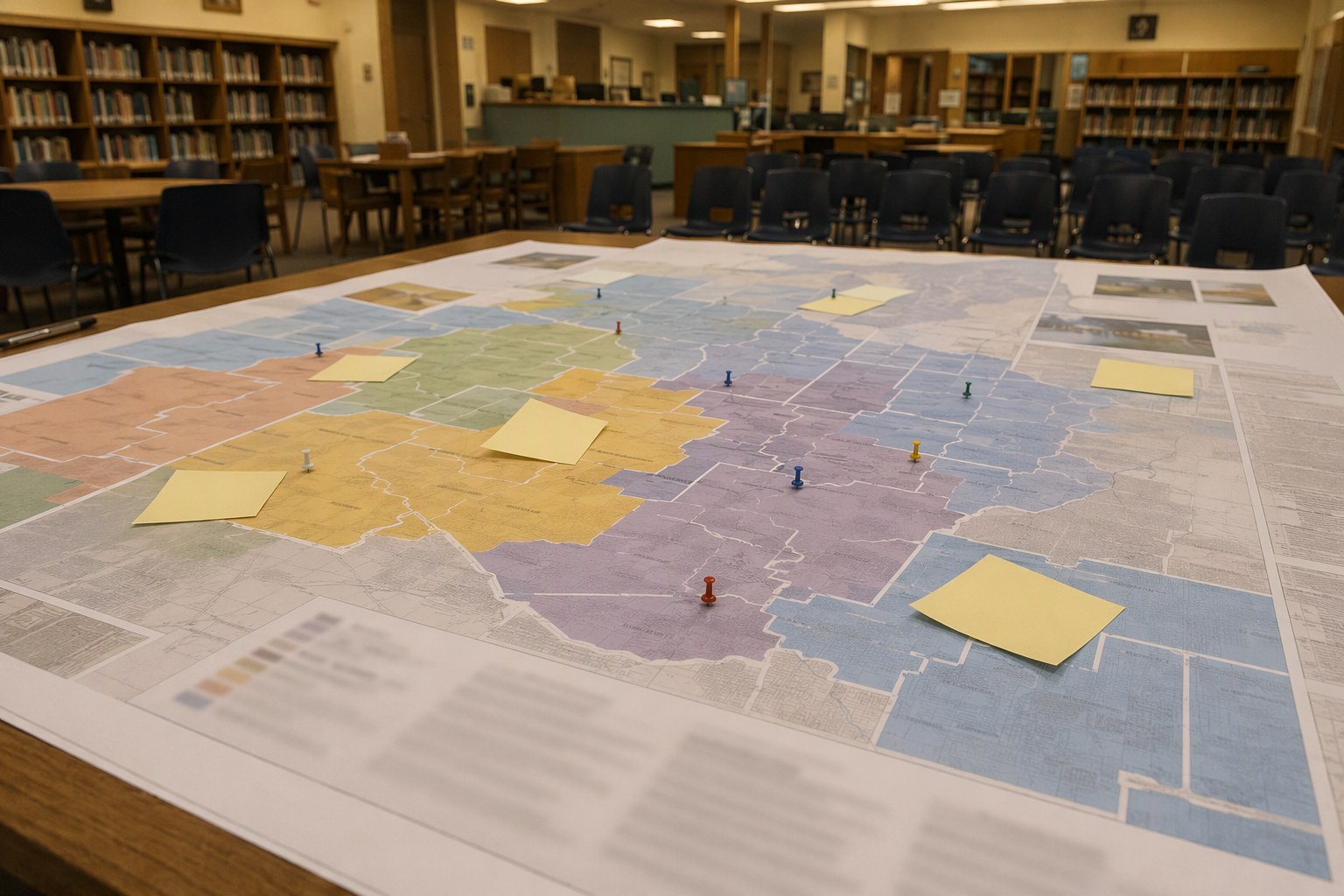
The Madison Metropolitan School District has postponed the third and final round of community input on new school boundary and attendance-area maps, moving sessions planned for December into January. District officials cited a need for more time, The Capital Times reported Monday.
The delay pushes back the last scheduled round of public engagement in the district's Building for the Future boundary review, a two-year effort to redraw where Madison children attend school, The Capital Times reported. The sessions, expected in December, will now come in January, according to Cedar News.
The boundary review began in mid-2025 with data gathering and analysis of enrollment forecasts and building utilization. The engagement phase — iterative scenarios, community forums and refinements — runs through January 2027 under the district's published timeline, so the postponement consumes much of the remaining slack in that schedule.
An earlier round of input sessions this year presented drafts of updated attendance-area maps, with district officials stressing that no final decisions had been made about where students would be assigned, according to a Greater Madison Chamber of Commerce notice.
The district has also disclosed that it owns two undeveloped parcels — eight acres at Acacia Ridge and 21 acres on Sprecher Road — that could one day host new school sites or additional programming, a factor in how far the new maps might reach. The Acacia Ridge land sits near the Olson, Stephens and Anana elementary attendance areas; the Sprecher Road parcel is near Kennedy and Elvehjem.
Under the district's timeline, a final recommendation — maps, reports and a School Board vote — is tentatively scheduled for February 2027. Any boundary changes would follow one of the most consequential facilities debates the district has undertaken in years, with enrollment shifts and building conditions both driving the redraw.