The Wiener Plant on Packers Avenue: Remembering Oscar Mayer's Madison Century
For nearly a hundred years, Oscar Mayer was Madison's factory — thousands of jobs, the Wienermobile, and a working-class east side built on sausage. The plant closed in 2017; the neighborhood is still deciding what comes next.
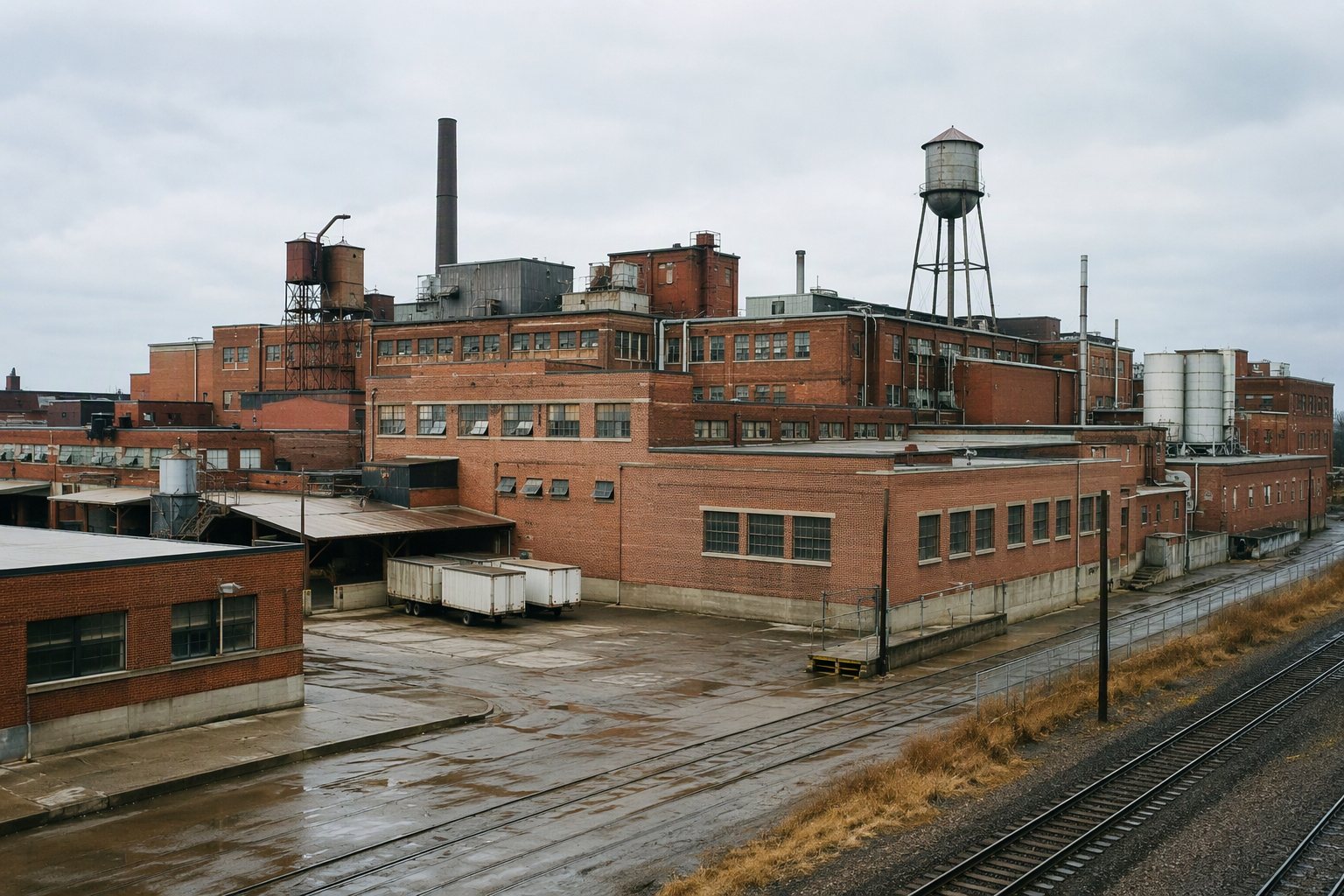
For generations of Madison families, 'the plant' needed no other name. Oscar Mayer's sprawling complex on Packers Avenue employed thousands of Madisonians at its peak — and its 2017 closure ended a century of industrial history on the city's north and east sides.
Oscar F. Mayer, a German immigrant butcher, founded the company in Chicago in 1883, but Madison became its second home. The company opened its Madison plant in 1919, and the complex grew into a small city of brick: slaughterhouses, smokehouses, the famous Wienermobile garage, and the research labs that made Oscar Mayer a national brand.
At mid-century, the plant employed more than 4,000 people, anchoring the working-class neighborhoods around it. The butcher's union was strong, the pay bought houses, and whole families worked successive generations inside the gates. Madison was a company town twice over — state government downtown, sausage on the north side.
At its peak, 'the plant' employed 4,000 Madisonians. Whole families worked successive generations inside the gates.
The end came in slow motion. Kraft Heinz, which had absorbed Oscar Mayer through mergers, announced in 2015 that it would close the Madison plant and consolidate production elsewhere. The final lines shut down in 2017, taking about a thousand remaining jobs with them.
What followed was a familiar Madison debate at industrial scale: what to do with 70-plus acres of prime near-downtown land. The city acquired the property, launched years of planning for mixed-use redevelopment, and has wrestled since with environmental cleanup, housing need and the question of what the new district owes the neighborhoods the plant once employed.
The old signs are gone, but the legacy is baked in — in the east side's grid, in Madison's labor history, and in the simple fact that one of America's most famous advertising icons, a 27-foot hot dog on wheels, was for decades a Madison vehicle.