The Robot Barns: How Automation Is Remaking the Wisconsin Dairy Farm
On a growing share of Wisconsin dairies, the cows milk themselves — and the change is about far more than labor.
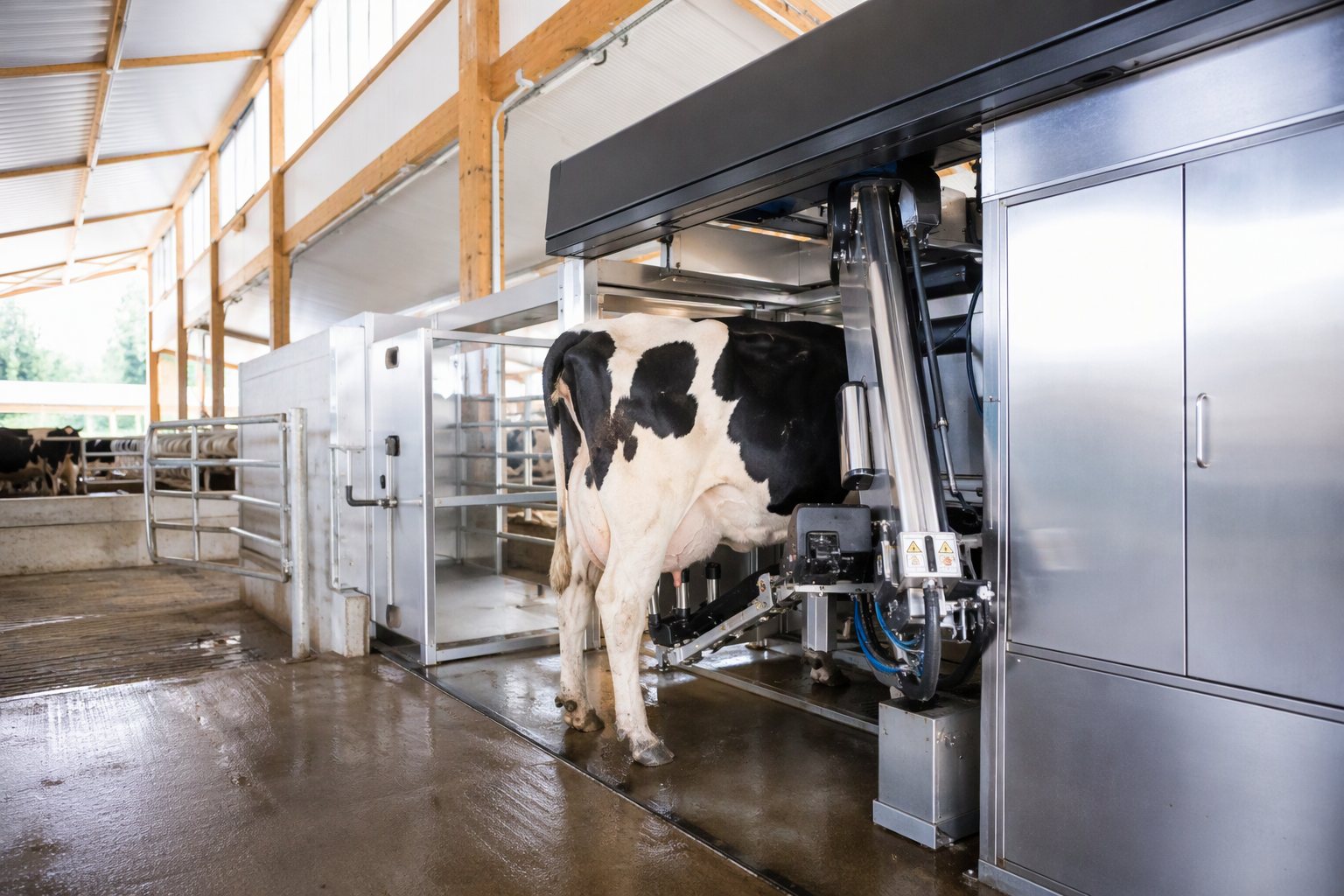
Inside a growing number of Wisconsin barns, the 4:30 a.m. milking alarm no longer rings. The cows, wearing transponders on their collars, wander to a robotic milking station whenever they please — and the robot does the rest.
Robotic milking — voluntary milking systems, in industry terms — arrived in Wisconsin in the early 2000s and has spread steadily since. By various industry estimates, robots now milk a meaningful and fast-growing share of the state's cows, concentrated among mid-sized family herds.
The pitch starts with labor. Milking two or three times a day, 365 days a year, is dairy farming's most relentless demand, and finding hired help for it has become nearly impossible in rural Wisconsin. A robot never calls in sick — and it lets the farmer's kids go to a Friday night football game.
The cows milk themselves now — and for some families, the robot is why the next generation stayed.
The cows, by most accounts, approve. Free-access barns let them eat, rest and milk on their own schedule, and many herds gain production simply because cows choose to be milked more often. Each milking also generates a stream of data — yield, conductivity, activity — that flags health problems days before the eye would catch them.
The barriers are real: robotic systems run to six figures per unit, and the technology has mostly favored herds big enough to spread the cost — one more pressure in the long consolidation that has reduced Wisconsin's dairy farm count from over 100,000 in the 1950s to a few thousand today.
Still, ask the farm families who've made the leap and a theme recurs: the robots didn't just change the milking. They changed what a dairy farming life looks like — and for some, they're the reason the next generation stayed.