The First Harvest of the Year: Wisconsin's Maple Syrup Season
When days warm above freezing and nights still freeze, Wisconsin's sugar maples run — and the state's oldest agricultural tradition begins.
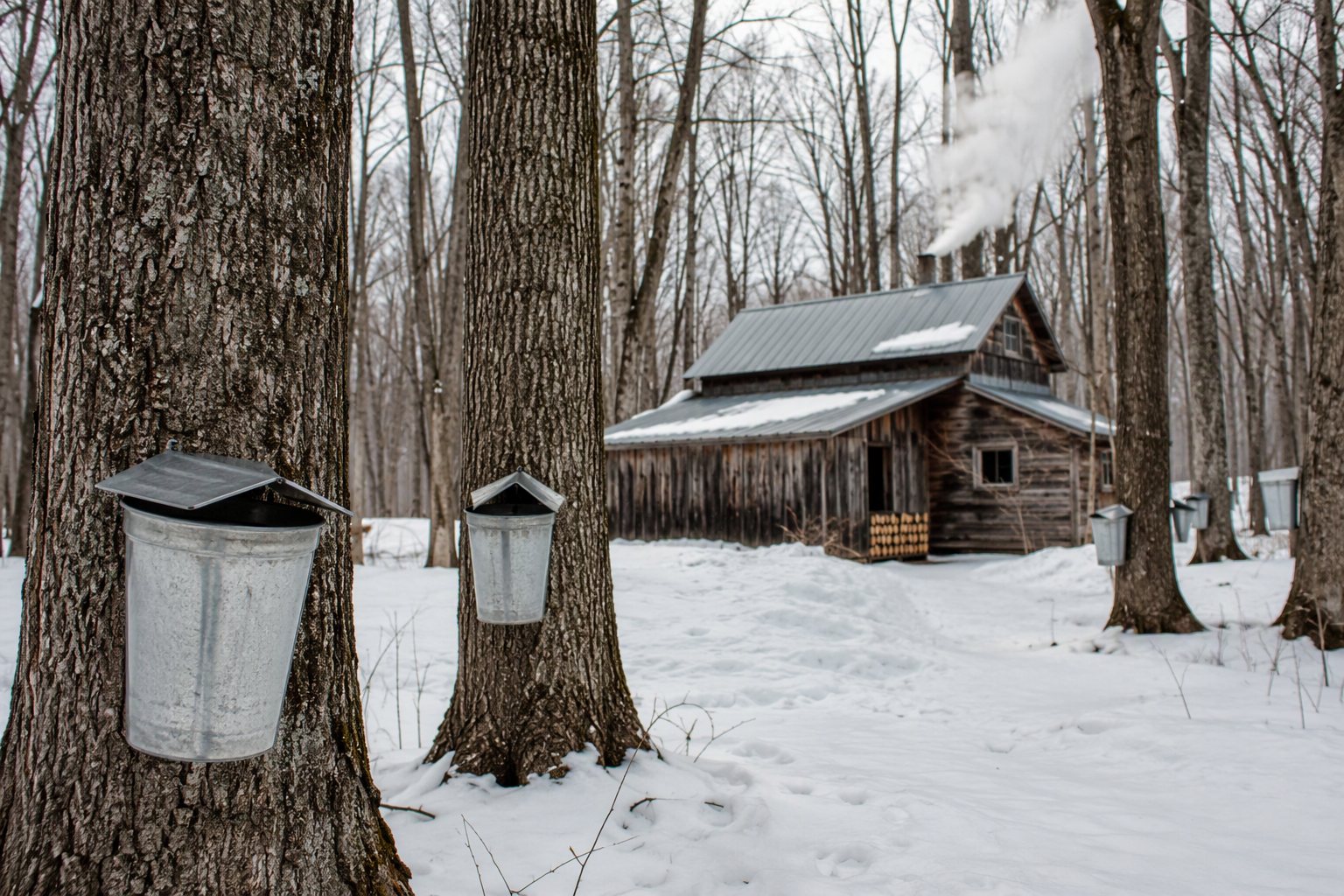
Long before the fields are fit to plant, Wisconsin's farm year has already begun. Sometime in late February or March, when the days climb above freezing and the nights still dip below, the sugar maples start to run.
Maple sugaring is the state's oldest harvest. Indigenous peoples of the region made maple sugar for centuries before European settlement, concentrating sap into sugar that kept and traded well — and teaching the practice to settlers, whose iron kettles replaced birch-bark vessels and hot stones.
The physics are delicate. Sap flows when freezing nights and thawing days create pressure pulses inside the tree; a few weeks of the right weather make the season, and a warm spell that arrives too fast ends it. Wisconsin sugar makers watch the March forecast the way other farmers watch the rain.
It takes 40 gallons of sap to make one gallon of syrup — and a few fragile weeks of freeze-and-thaw to make the season.
The state ranks fourth nationally in maple syrup production, behind Vermont, New York and Maine, with hundreds of commercial producers and countless backyard operations boiling sap on everything from gleaming evaporators to cinder-block rigs. It takes roughly 40 gallons of sap to make one gallon of syrup.
Modern sugaring has gone high-tech — vacuum tubing systems string entire woods together, reverse osmosis concentrates sap before boiling, and efficient evaporators have cut the wood pile dramatically — but the essential act is unchanged: catching the sap as it runs and boiling it down.
For the public, the season is one of Wisconsin's great rural open houses. Sugar bushes across the state host tours and pancake breakfasts each March and April, and the first syrup of the year — dark, rich and faintly smoky — tastes like spring itself.