Fighting Bob and the Wisconsin Idea: The Progressive Experiment That Still Shapes the State
Robert M. La Follette turned Wisconsin into a laboratory of democracy — direct primaries, regulation, a university in service of the state. A century later, the fight over his legacy is the fight over Wisconsin itself.
On a February night in 1904, delegates at a Republican convention watched Robert M. La Follette read, line by line, a list of railroad pass-holders among Wisconsin politicians. The room hated him for it. Voters loved him for it. That was the Progressive Era in miniature.
La Follette — Madison lawyer, congressman, then governor from 1901 to 1906 — waged war on the railroad and lumber interests that dominated state politics. In office he delivered the first direct primary in the nation, a powerful railroad regulatory commission, civil service reform and a state tax commission that became a national model.
His deepest legacy may be the Wisconsin Idea: the principle that the boundaries of the university are the boundaries of the state. UW experts staffed the new regulatory agencies; the Capitol, in turn, funded research aimed at farmers' and workers' problems. The model of university-government partnership spread nationwide.
La Follette's Wisconsin Idea: the boundaries of the university are the boundaries of the state.
La Follette took the fight to Washington as a senator, opposed American entry into World War I — a stand that nearly got him expelled — and ran for president in 1924 on a Progressive Party ticket, winning his home state and nearly five million votes. He died in 1925, exhausted, months after the campaign.
His family carried the torch: sons Robert Jr. and Philip served as senator and governor. The Progressive tradition later nourished everything from unemployment insurance (Wisconsin enacted the nation's first, in 1932) to the state's environmental movement.
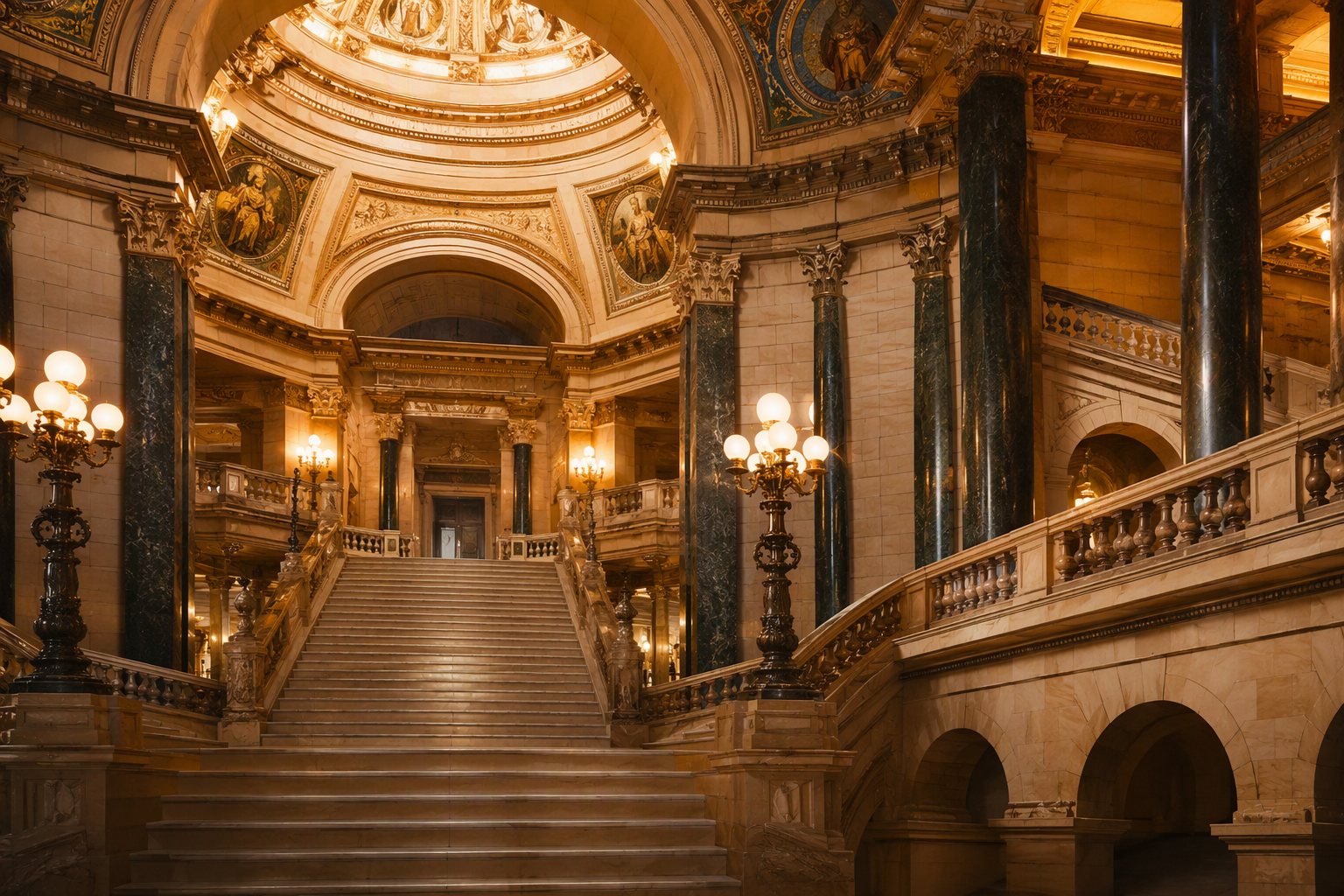
Wisconsin has swung hard in other directions since — the 2011 battles over Act 10 were fought, symbolically, over La Follette's ghost. But walk the Capitol he stormed, or read Bascom Hill's sifting-and-winnowing plaque, and the experiment he started is still the standard the state argues about.