The Fire Wisconsin Remembers: Peshtigo, October 8, 1871
The same night Chicago burned, a firestorm in northeastern Wisconsin killed as many as 1,500 people — the deadliest wildfire in American history — and was nearly forgotten.
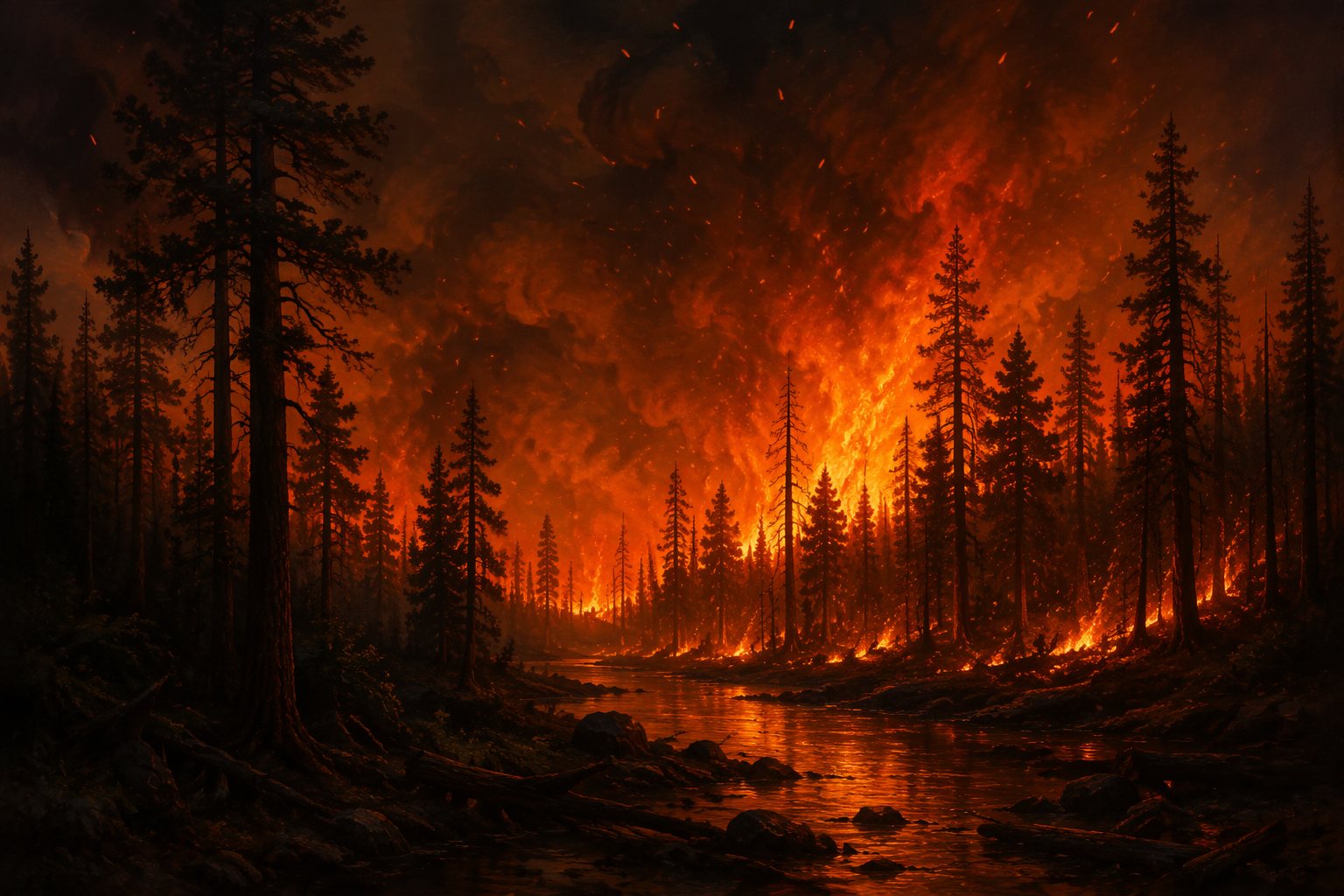
On the night of October 8, 1871, two great fires burned in the Midwest. One destroyed Chicago and became legend. The other swept through the lumber country around Peshtigo, Wisconsin, killed far more people, and slipped almost out of the national memory.
The autumn of 1871 was brutally dry across the upper Midwest. Around Peshtigo, a company lumber town near Green Bay, settlers had spent the season burning slash and clearing land, and small fires had smoldered for weeks in the surrounding woods.
That Sunday night, a cold front drove the fires together into something witnesses struggled to describe — a firestorm, a tornado of fire, moving faster than a man could run. It consumed Peshtigo in about an hour and burned some 1.2 million acres across northeastern Wisconsin and into Michigan's Upper Peninsula.
As many as 1,500 people died in an hour — the deadliest wildfire in American history, overshadowed by a city fire the same night.
The death toll has never been settled. Estimates range from 1,200 to more than 1,500 — many times Chicago's toll — including whole families found in wells, fields and the Peshtigo River, where survivors spent the night shoulder-deep in water as the town burned around them.
Chicago's fire, breaking out the same night, swallowed the telegraph wires and the headlines. Peshtigo's survivors rebuilt with little outside attention; the Peshtigo Fire Museum and a mass grave in the town cemetery are their memorial.
Fire historians now study Peshtigo as a case study in fire behavior — drought, fuel, wind and human ignition combining into a storm that generated its own weather. In an era of megafires, the deadliest fire in American history feels less like a curiosity than a warning.