The Cornish Colony of Mineral Point: How Wisconsin's First Boomtown Went to Cornwall and Back
Lead drew Cornish miners to Iowa County in the 1830s; their stone cottages outlasted the mines, the boom, and nearly the town itself.
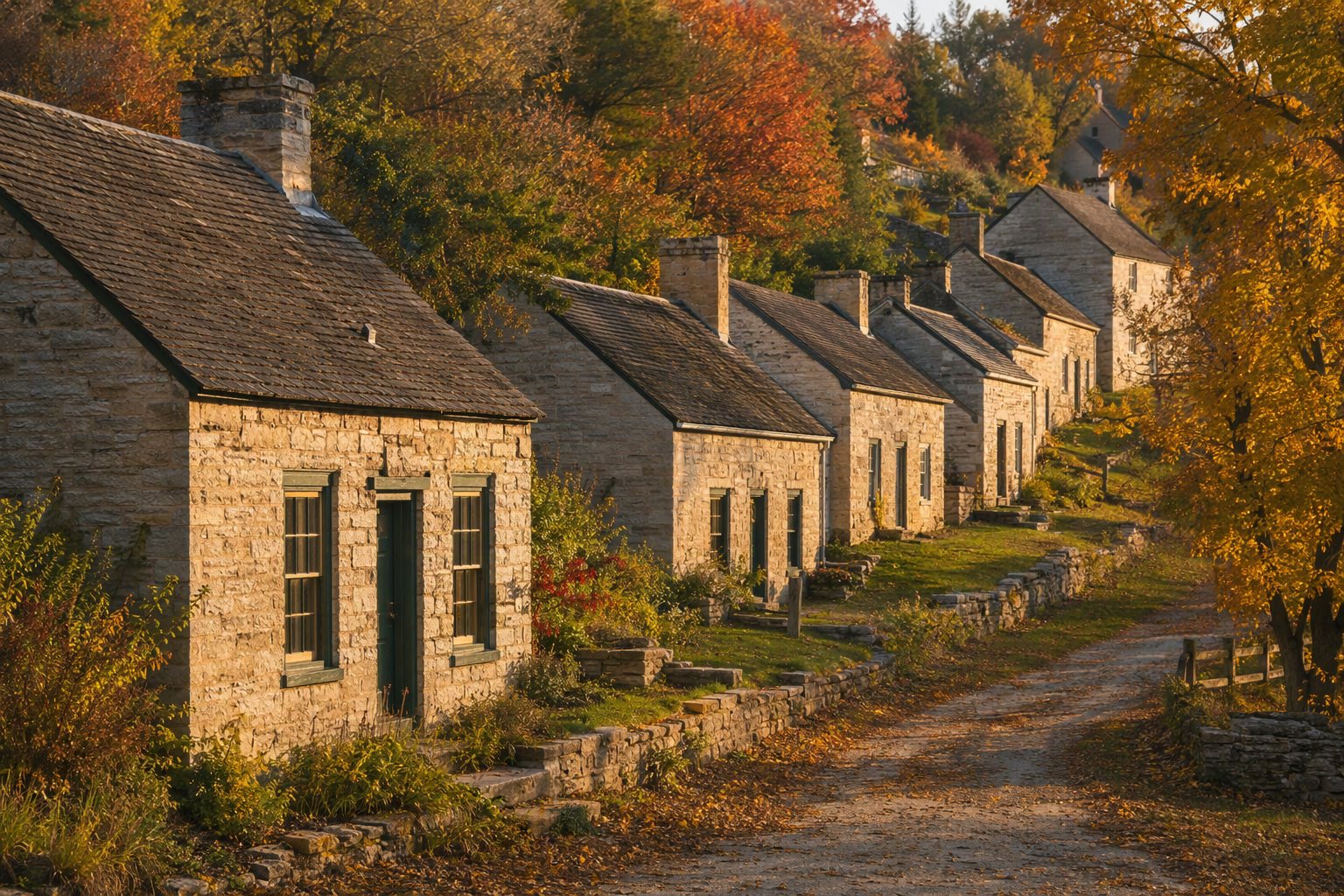
Drive an hour west of Madison into Iowa County and you'll find a Wisconsin main street that looks faintly, unmistakably Cornish — because for a generation, it essentially was.
Lead was Wisconsin's first industrial rush. In the 1820s and 30s, miners flooded the lead region of the future state's southwest corner, and for a time the diggings around Mineral Point held more people than Milwaukee or Green Bay.
The Cornish arrived with something the earlier frontier miners lacked: centuries of hard-rock mining experience from the tin and copper mines of Cornwall. They brought their methods, their Methodist chapels, their pasties and saffron cake — and their masonry, raising sturdy limestone cottages that stepped up Mineral Point's hillsides.
Nobody could afford to tear Mineral Point down — and that turned out to be its salvation.
When the lead played out and the California gold rush pulled miners west in 1849, Mineral Point faded into a sleepy county-seat afterthought — which turned out to be its salvation. Nobody could afford to tear the old town down.
In the 1930s, preservationists Bob Neal and Edgar Hellum began restoring a row of derelict Cornish cottages known as Pendarvis, launching one of America's earliest private historic restorations. Pendarvis is now a Wisconsin Historical Society site, and Mineral Point's whole downtown is on the National Register of Historic Places.
Today the town is an arts colony as much as a museum — galleries, studios and a theater fill the old stone buildings — but the Cornish pasty is still on the menu, and the cottages still climb the hill, proof that Wisconsin's first boom built to last.