Before the Statehouse, There Were the Mounds: The Ancient Earthworks Beneath Southern Wisconsin
A thousand years ago, the people of this region shaped the land itself into bears, birds and panthers. Dane County still holds one of the densest concentrations of effigy mounds on Earth — if you know where to look.
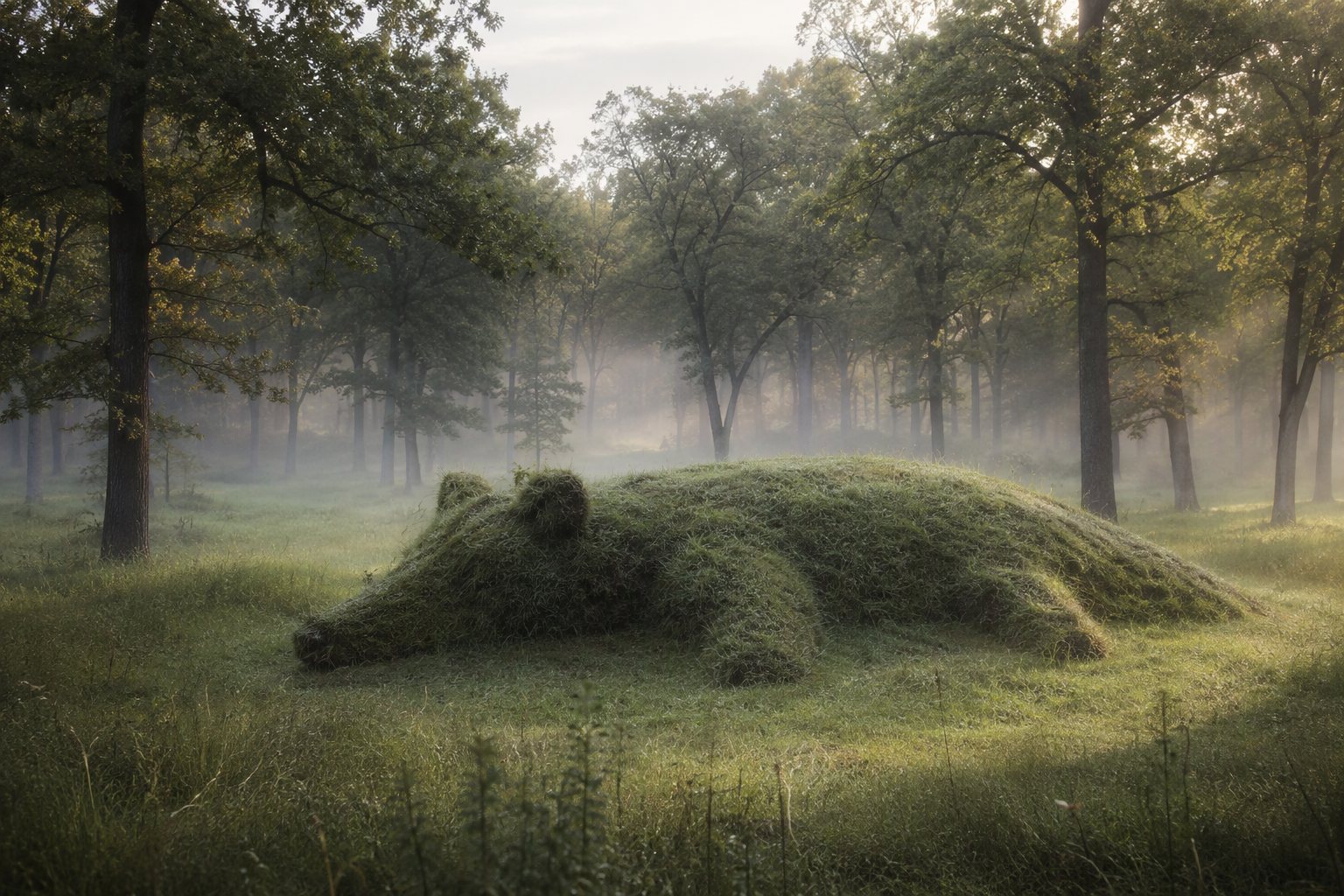
Long before surveyors platted Madison's isthmus, the people who lived here were already reshaping it — not with streets and capitol domes, but with earthen sculptures of bears, water spirits and birds, some stretching hundreds of feet across the ridgelines.
Between roughly 700 and 1200 A.D., Native peoples in what is now southern Wisconsin built thousands of conical, linear and effigy mounds — earthen forms shaped like animals and spirit beings. The practice was so concentrated here that archaeologists call this the heartland of the effigy mound culture. Nowhere else in the world were so many animal-shaped earthworks built.
Dane County was once home to an extraordinary share of them. The shores of the four lakes held thousands of mounds in groups that followed the contours of the land, including the famous bird effigy with a wingspan of more than 600 feet near Lake Mendota. Most were destroyed by farming and city building in the 19th and 20th centuries; only a fraction survive.
Dane County once held thousands of effigy mounds — earthen bears, birds and panthers older than most European cathedrals.
The Ho-Chunk Nation, whose ancestors are associated with the mound builders, continues to advocate for the protection of the surviving sites. Mounds are protected under Wisconsin law, and several groups are preserved in public places — including the effigy mound group at Observatory Drive on the UW-Madison campus and the restored groups at Indian Lake County Park in Dane County.
Archaeologists still debate the mounds' full meaning. They served as burial places, but their shapes — bears, panthers, thunderbirds — also map onto clan symbols and spiritual geography, suggesting they were ceremonies made permanent in earth, markers of a people's relationship with the land between the lakes.
For modern visitors, the surviving mounds reward slow looking. The best-preserved large site open to the public is Effigy Mounds National Monument across the Mississippi in Iowa, but Dane County residents need only walk the Lakeshore Path or visit a county park to stand beside earthworks older than most European cathedrals.