The Root of It: How Marathon County Became the Ginseng Capital of the World
Nearly all American ginseng grows under shade cloth in one Wisconsin county — and its farmers live at the mercy of the U.S.-China relationship.
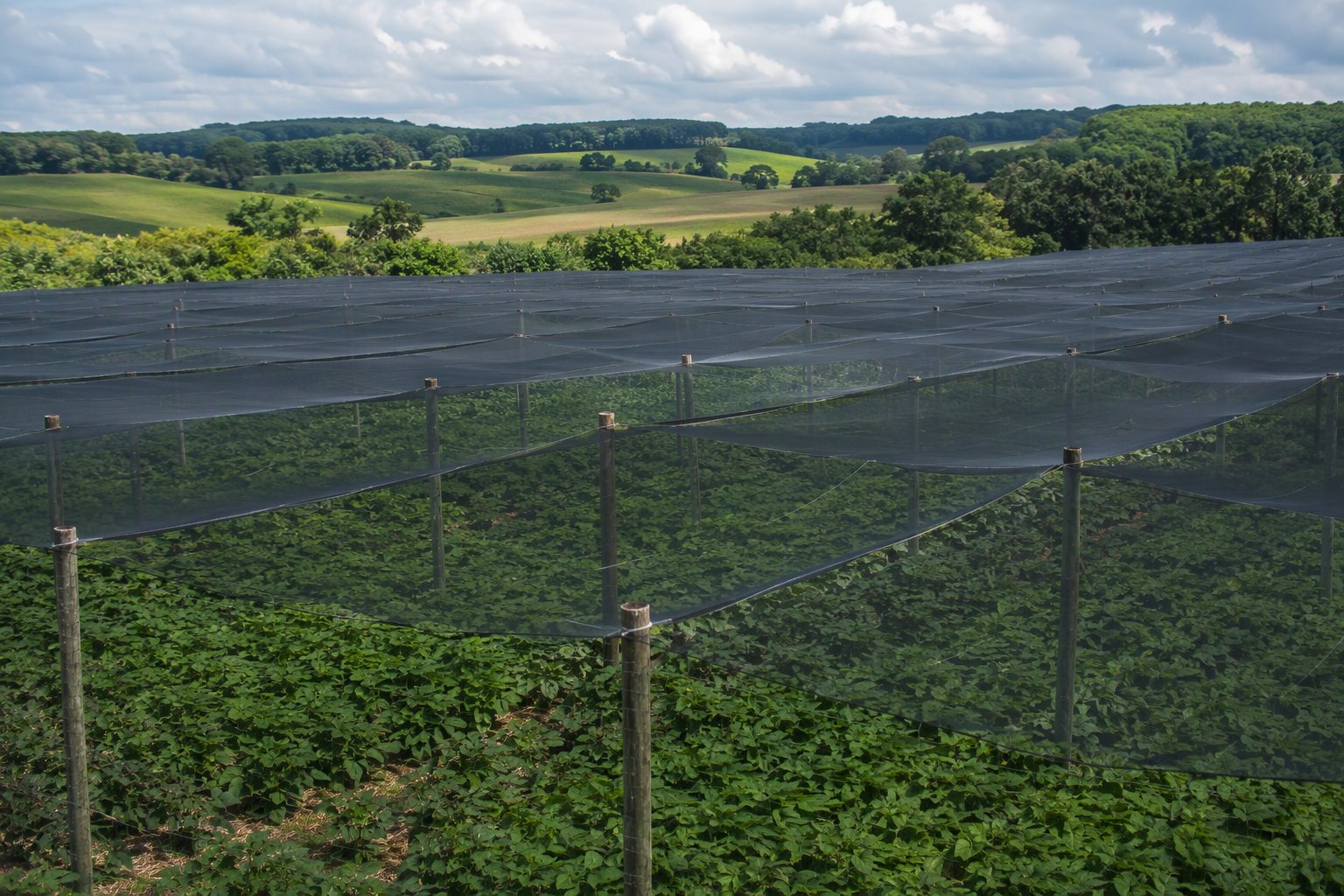
Drive the back roads around Edgar, Wausau and Marathon City and you'll pass field after field covered in black shade cloth. Underneath grows Wisconsin's most cosmopolitan crop: American ginseng, the root that ties Marathon County directly to markets on the other side of the Pacific.
American ginseng has grown wild in Wisconsin's hardwood forests for centuries, prized in Chinese medicine as a cooling counterpart to Asian ginseng. The Fromm brothers of Hamburg, in Marathon County, pioneered its cultivation in the early 1900s, translating wild-growing conditions into farmed ones.
Today Marathon County grows the overwhelming majority of American ginseng — by common industry estimates, 95 percent or more of the U.S. crop — earning it the title Ginseng Capital of the World. The sandy, well-drained soils and cool climate of central Wisconsin suit the slow-growing root, which typically spends three to four years in the ground before harvest.
Marathon County grows roughly 95 percent of America's ginseng — and most of it sails for China.
The crop's market is concentrated in a way few commodities are. The great majority of Wisconsin ginseng is exported, most of it to China and other Asian markets, where Wisconsin-grown root commands premium prices for its quality. That makes ginseng farmers exquisitely sensitive to trade policy.
They've felt it acutely: tariffs imposed during the U.S.-China trade fights beginning in 2018 slashed prices and left crops unsold, and growers have weathered waves of retaliatory tariffs since, alongside pandemic disruptions. The roughly 170 farms still growing ginseng in Marathon County are survivors of a much larger industry — more than a thousand farms grew it in the 1990s.
The industry keeps adapting: cultivating new markets in Taiwan and India, marketing directly to American consumers, and leaning into agritourism with events like the Wisconsin ginseng celebrations around Wausau. For a crop most Wisconsinites have never seen, it remains one of the state's most global.